Museum Exhibition: Film Photography
Interaction Design | UX Research
TL;DR
I helped design an interactive museum exhibition that teaches experimental film photography through movement, tactile discovery, and self-guided play instead of rigid instruction.
Date
Jan 2025 – May 2025
Role
Product Designer
UX Researcher
Tools
Figma
Miro
Google Docs
Methods
Cultural Probe
Prototyping
Introduction
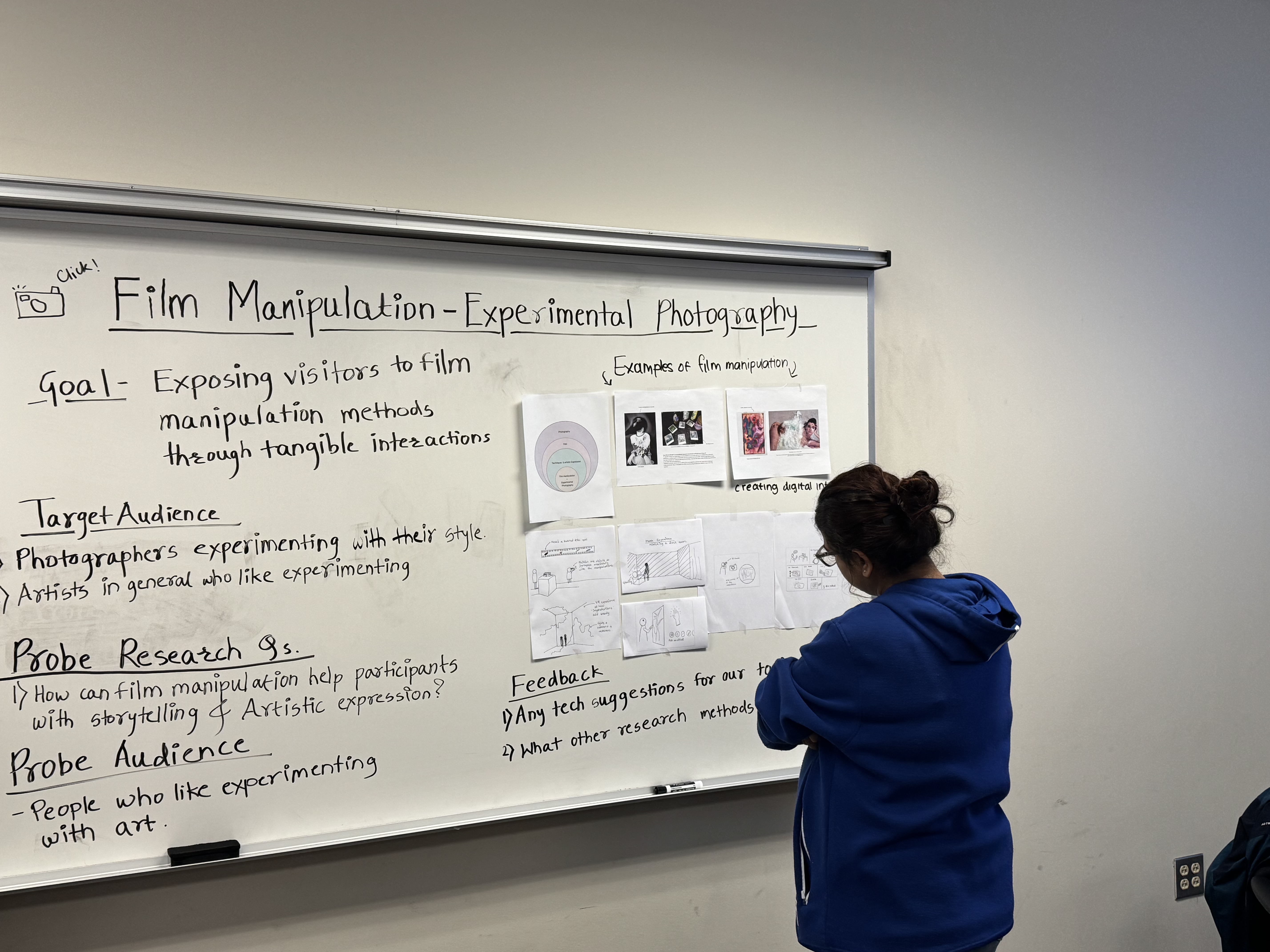
Experimental film photography invites freedom of expression through post-processing and physical manipulation of film. We focused on the tactile, hands-on side of that process to make it accessible to new audiences.
Goal
Expose visitors to film manipulation methods through tangible, learn-by-doing interactions.
Target Audience
Artists and creatives who value experimentation and process over perfection.
Interviews showed that photographers have strong personal identities and styles, so the exhibit encourages exploration rather than instruction.
Museum Exhibition
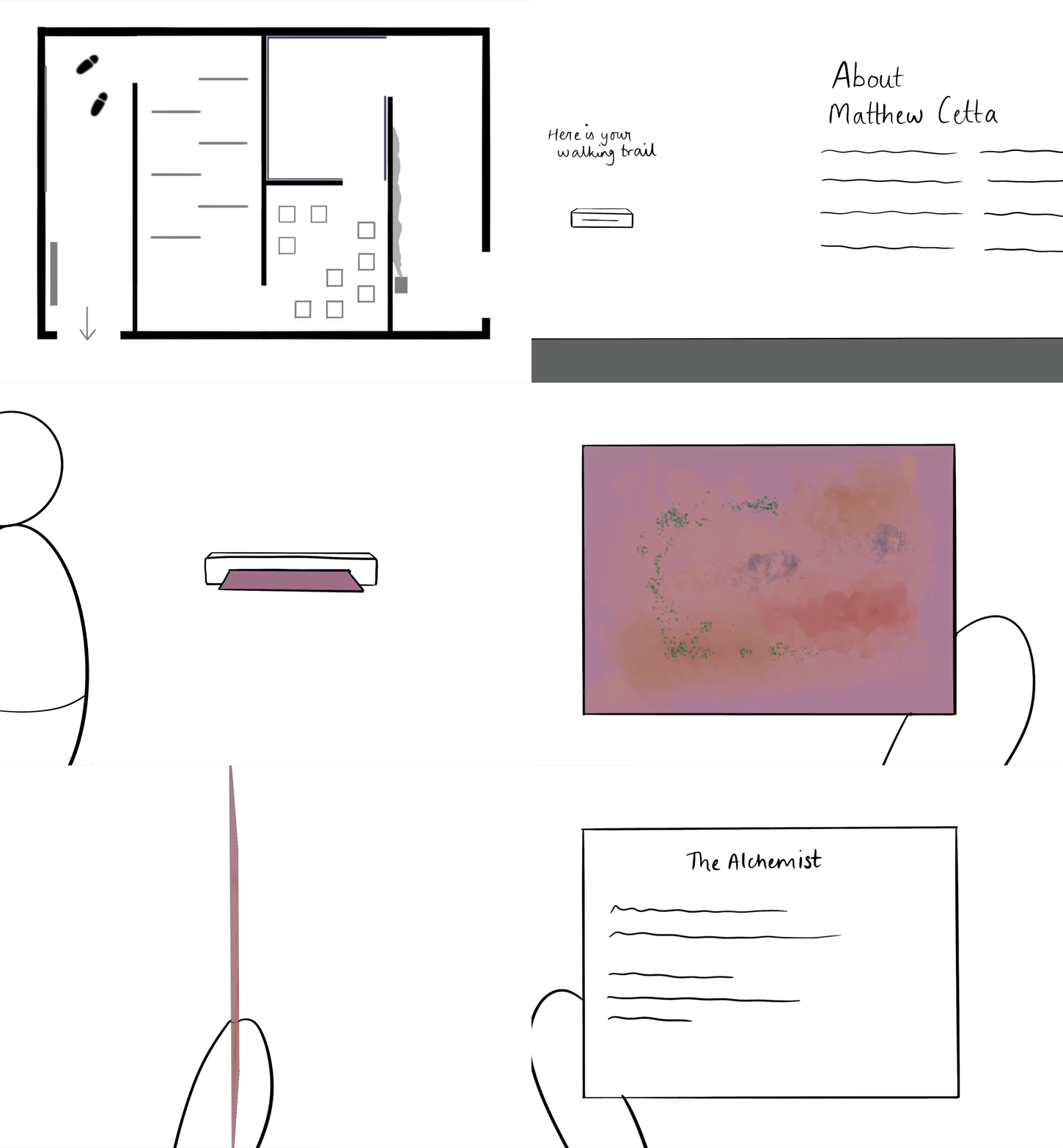
The experience spans five rooms-Break the Mould, Emulsion, The Film Soup, The Drying Line, and The Trail-each inspired by photographer Matthew Cetta's experimental techniques.
Cetta's work (boiling, freezing, chemicals, electricity) informed a hands-on, observation-driven exhibit that embraces imperfection and creative freedom.
Concept
We used gesture, proximity, and motion to encourage embodied learning. Visitors discover how movement and materials affect outcomes without explicit instructions. Each room reflects one stage of Cetta's process and prioritizes self-expression over technique.
Impact
By merging digital interaction with analog metaphor, the exhibit encourages creative risk and reframes imperfection as a valid, expressive outcome.
Prototypes
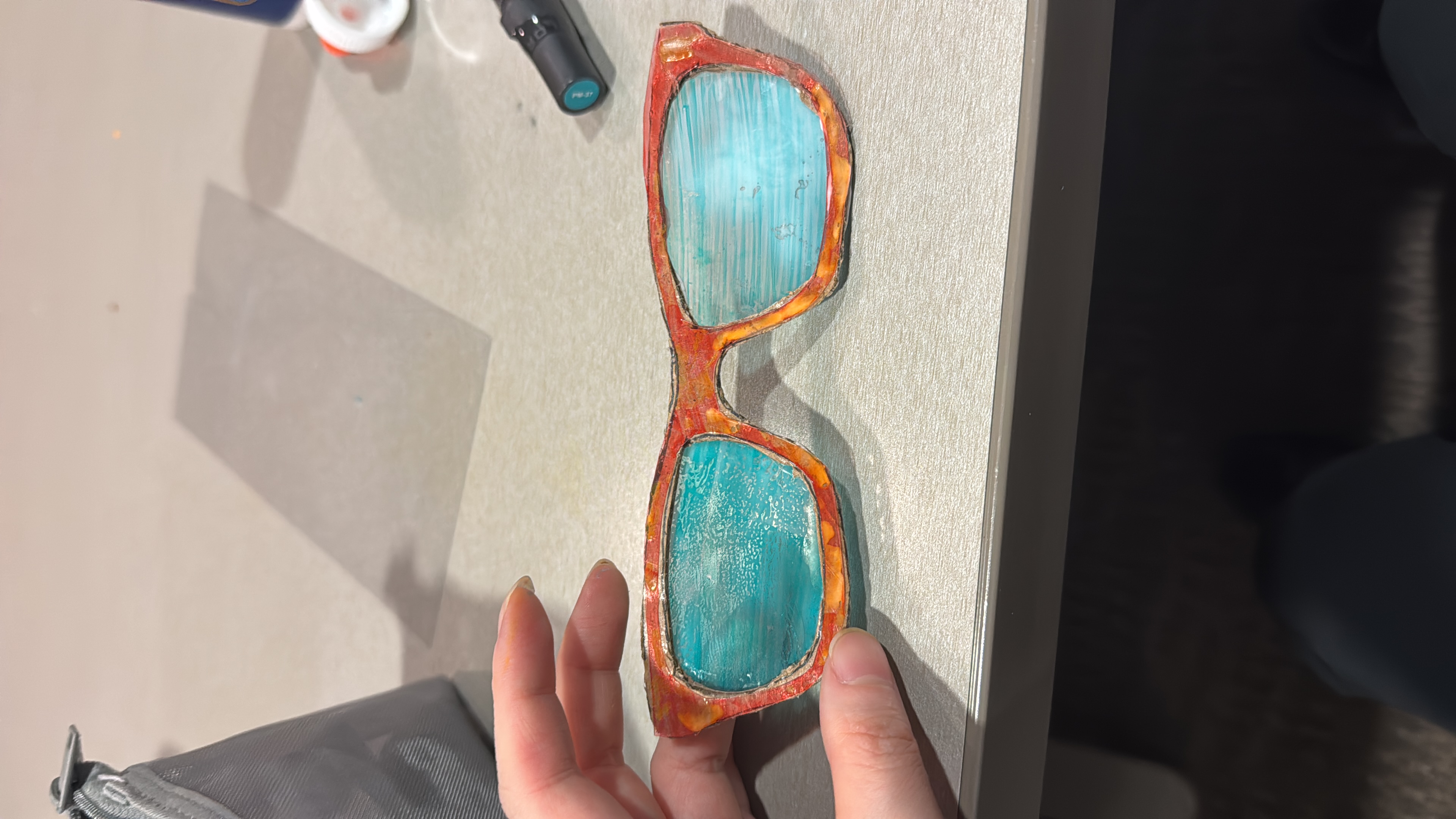
We initially explored smart glasses with filters, then pivoted to motion-based screens for better usability and engagement. This informed the Emulsion room, where real-time feedback encourages expression and reflection.
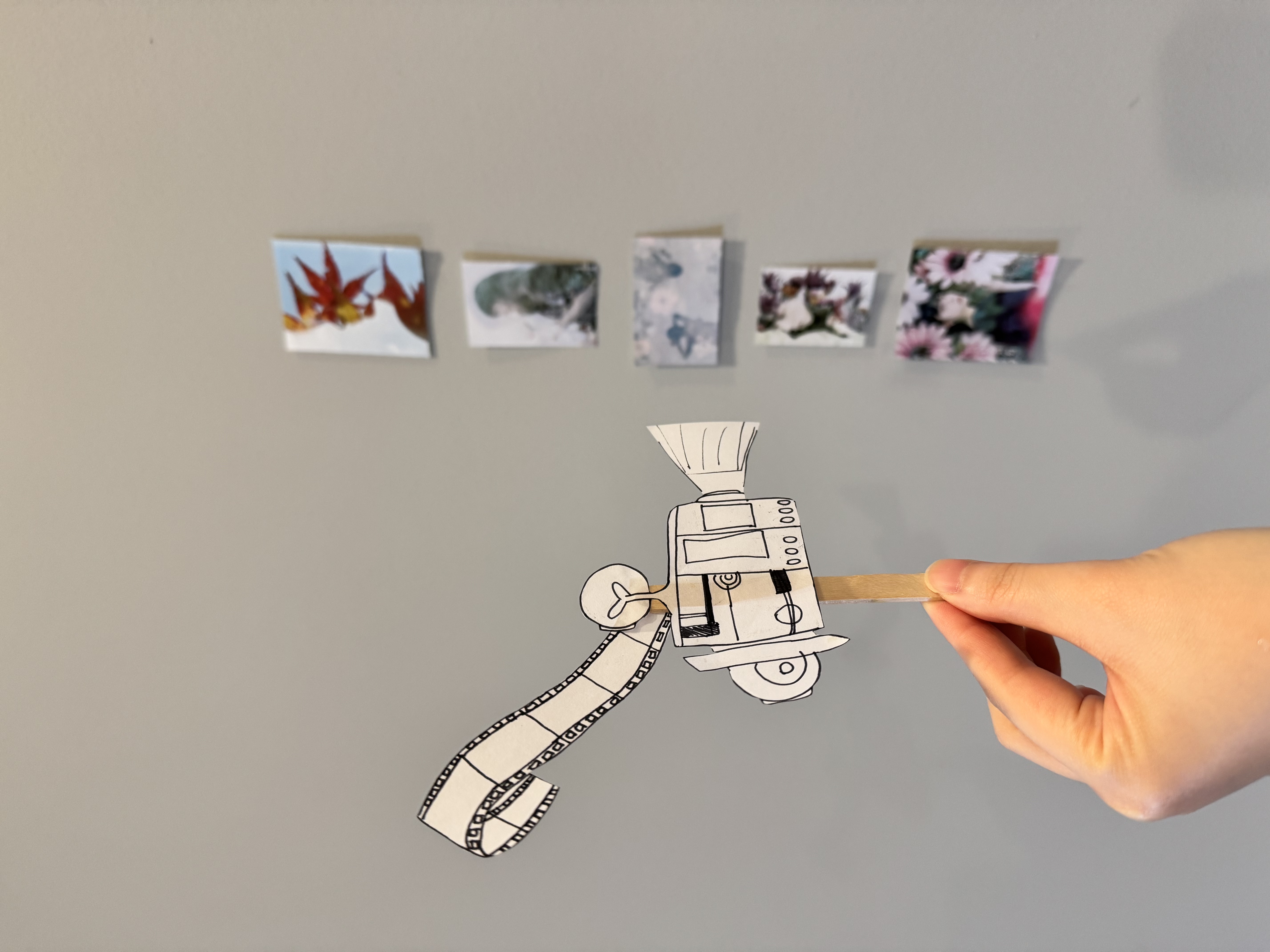
Cultural Probe
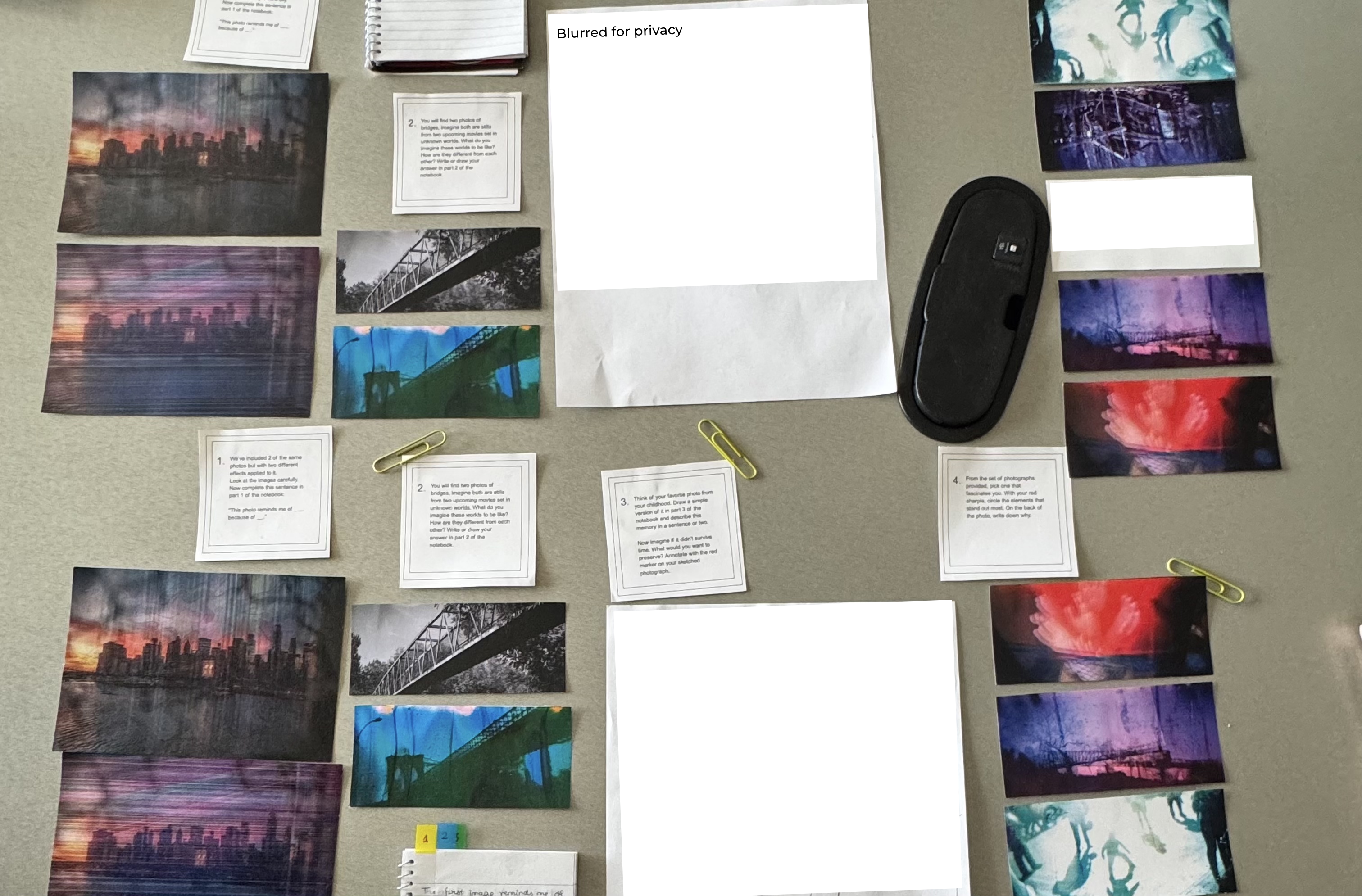
Participants reflected most on memories tied to family, childhood, and travel. This led us to use proxemics-limiting focus to one image at a time-to slow the experience and deepen personal interpretation.
The probe revealed that visitors connect more deeply when experiences are personal and focused.
Museum Learning Goals
The exhibit invites visitors to explore Cetta's approach using movement and gesture. Rather than teaching technique, it encourages creative risk-taking and shows that film manipulation can be personal, imperfect, and freeing.
Break the Mould
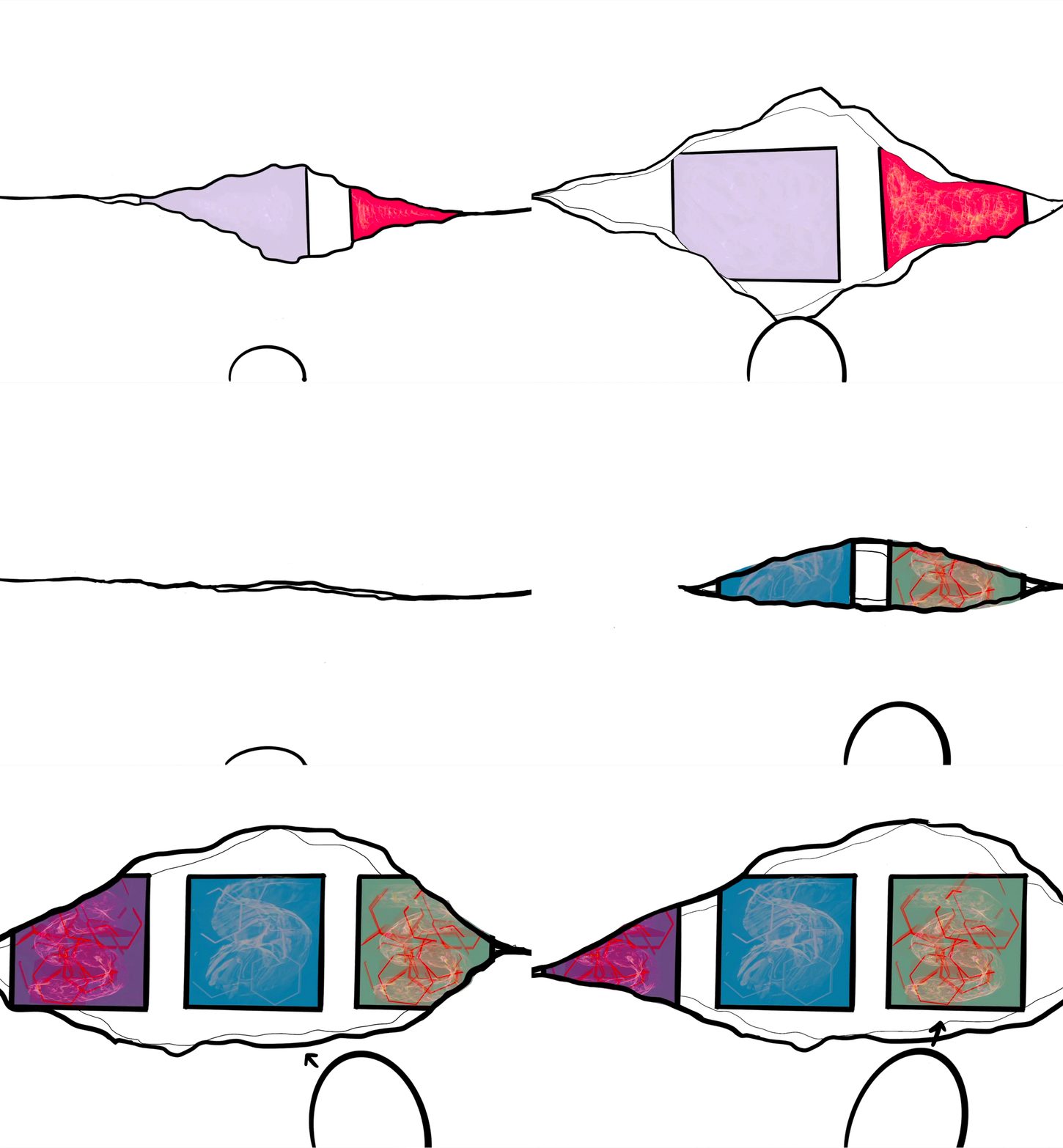
Visitors trigger a wall crack using head tracking, revealing hidden images embedded within. This metaphorical interaction introduces the idea of breaking traditional photography norms.
Emulsion
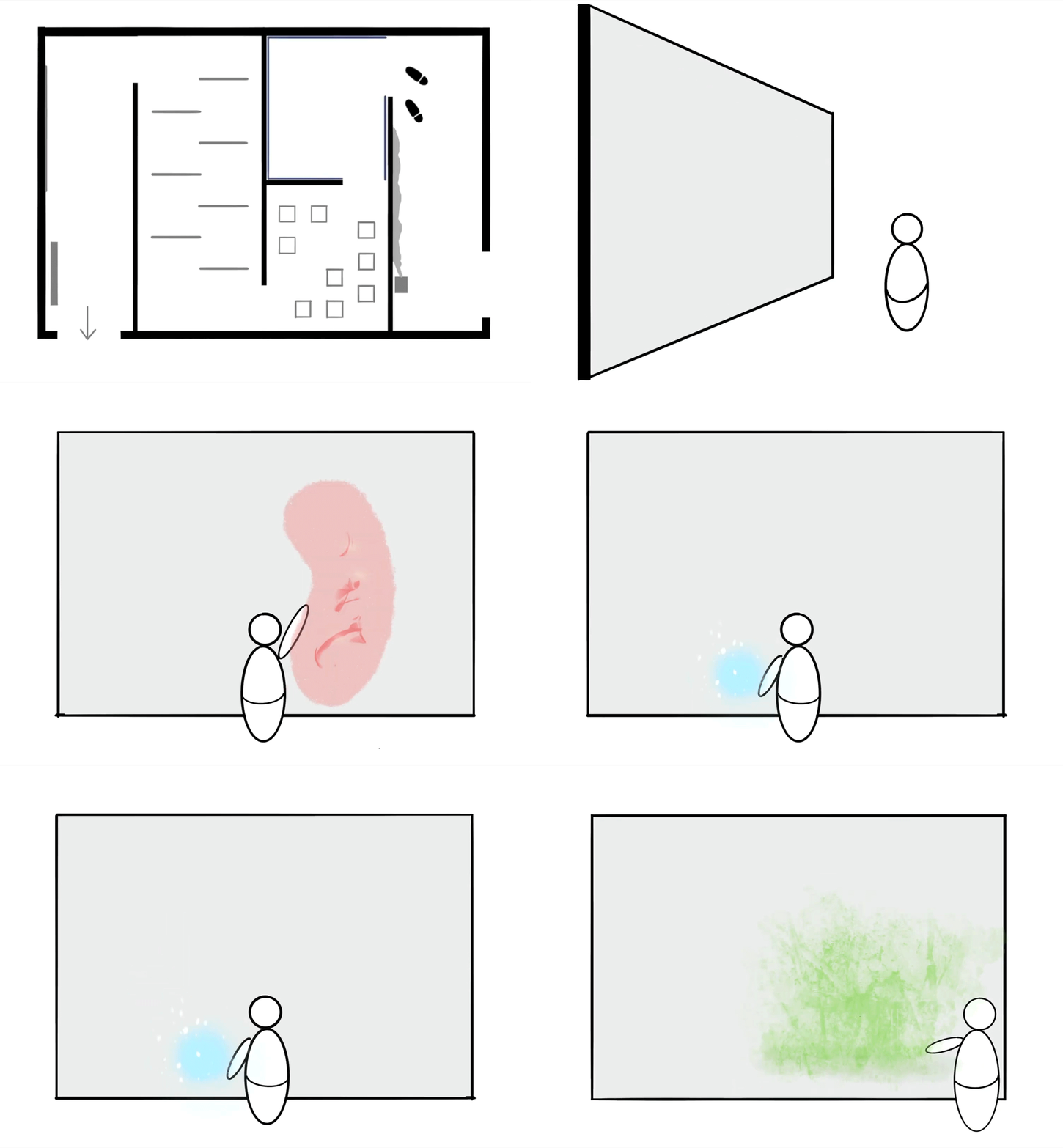
Using motion sensors, visitors manipulate digital images with effects like boiling, freezing, or electricity. The screen reacts to the direction and duration of gestures, simulating how sensitive film emulsions behave.
The Film Soup
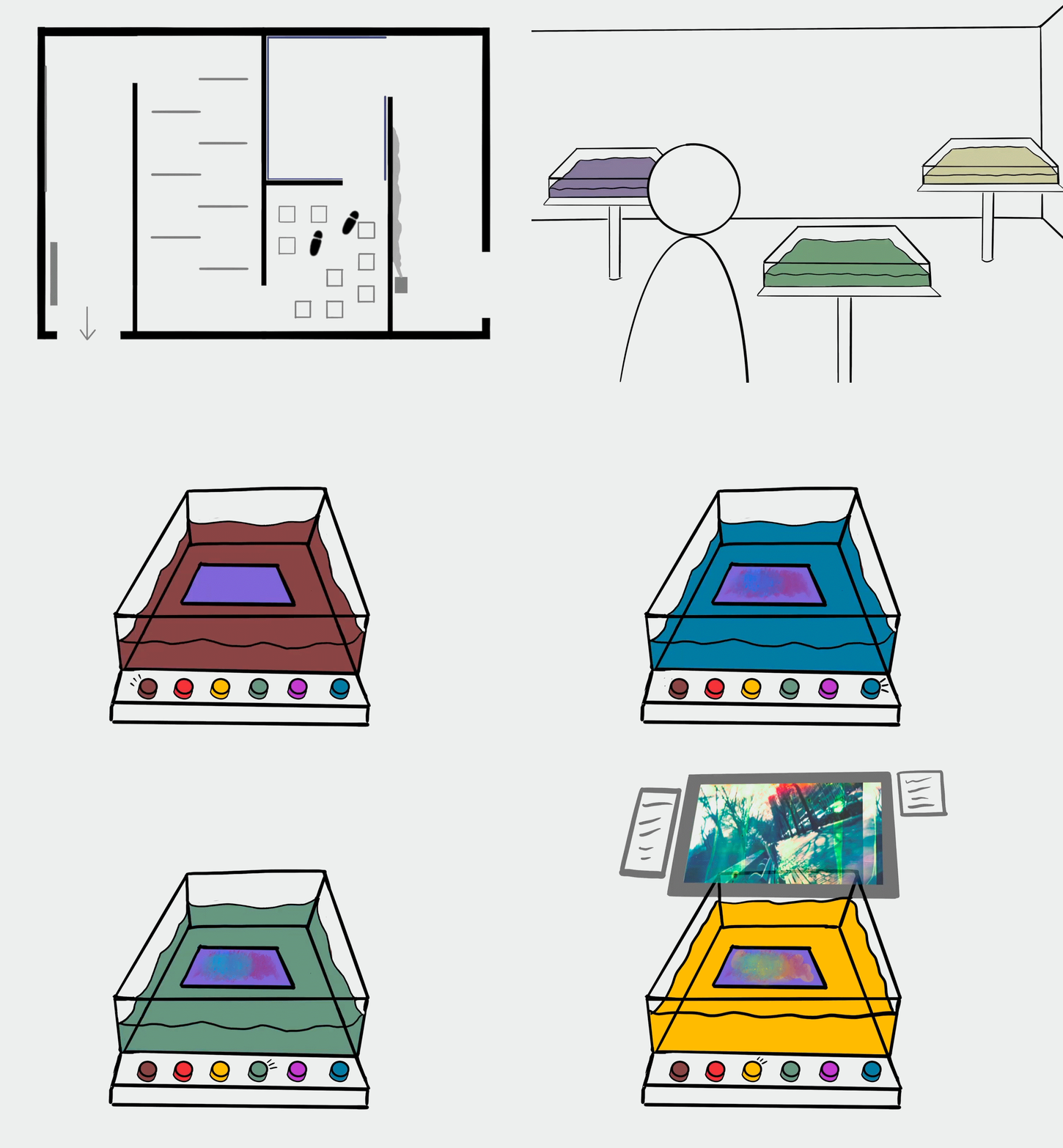
Buttons labeled with chemicals activate liquid simulations across a digital screen, distorting images in real time. Inspired by Cetta's use of substances like bleach and cough syrup, this room visualizes chemical unpredictability.
The Drying Line
A zigzag hallway mimicking a darkroom reveals prints only when visitors approach. Their own manipulated images are displayed, creating an intimate, reflective moment.
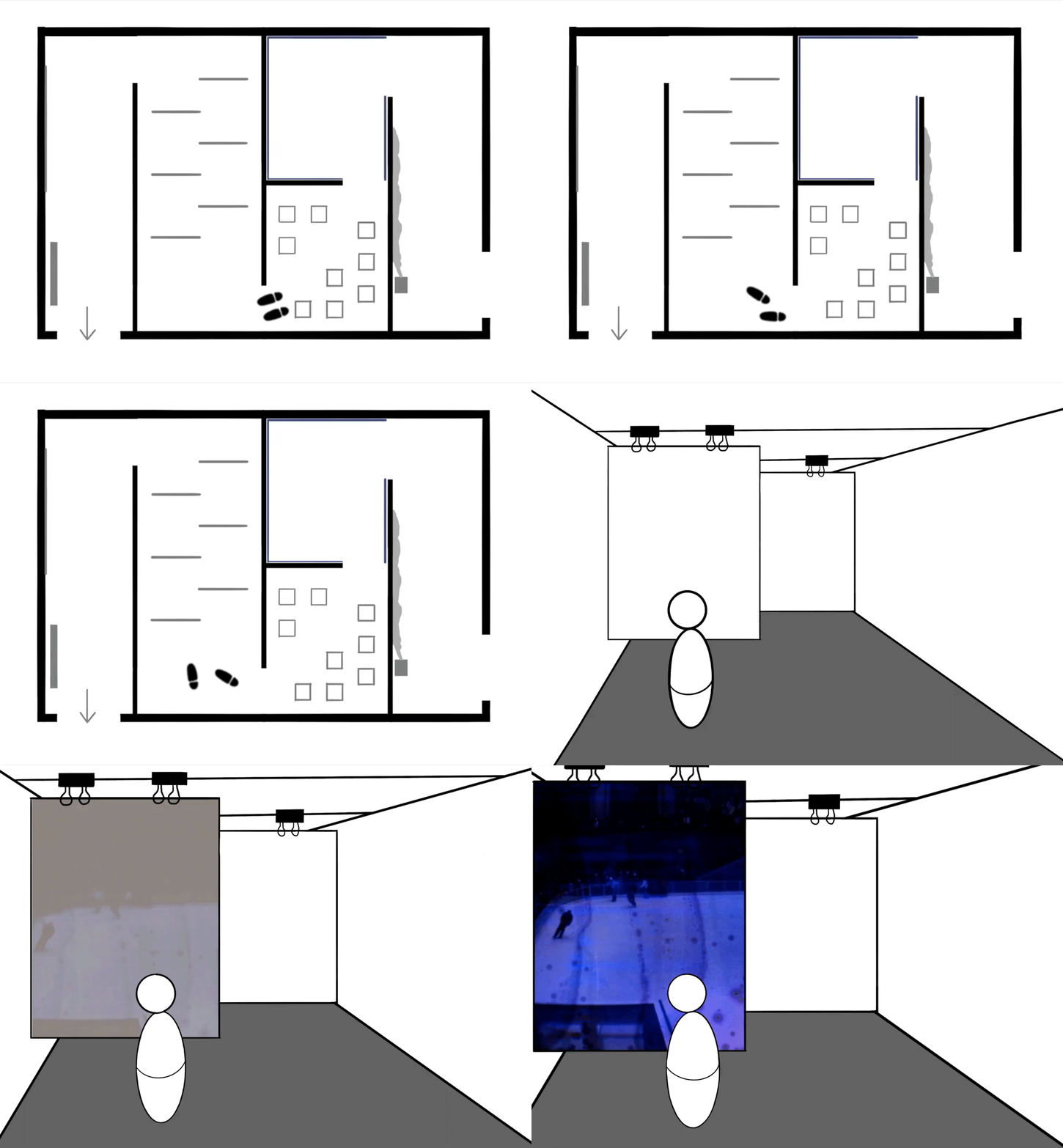
The Trail
A surprise finale where each visitor receives a custom print based on their movement through the exhibit. Effects correlate with behavior (e.g., standing still = boil), turning their journey into a personalized artwork.