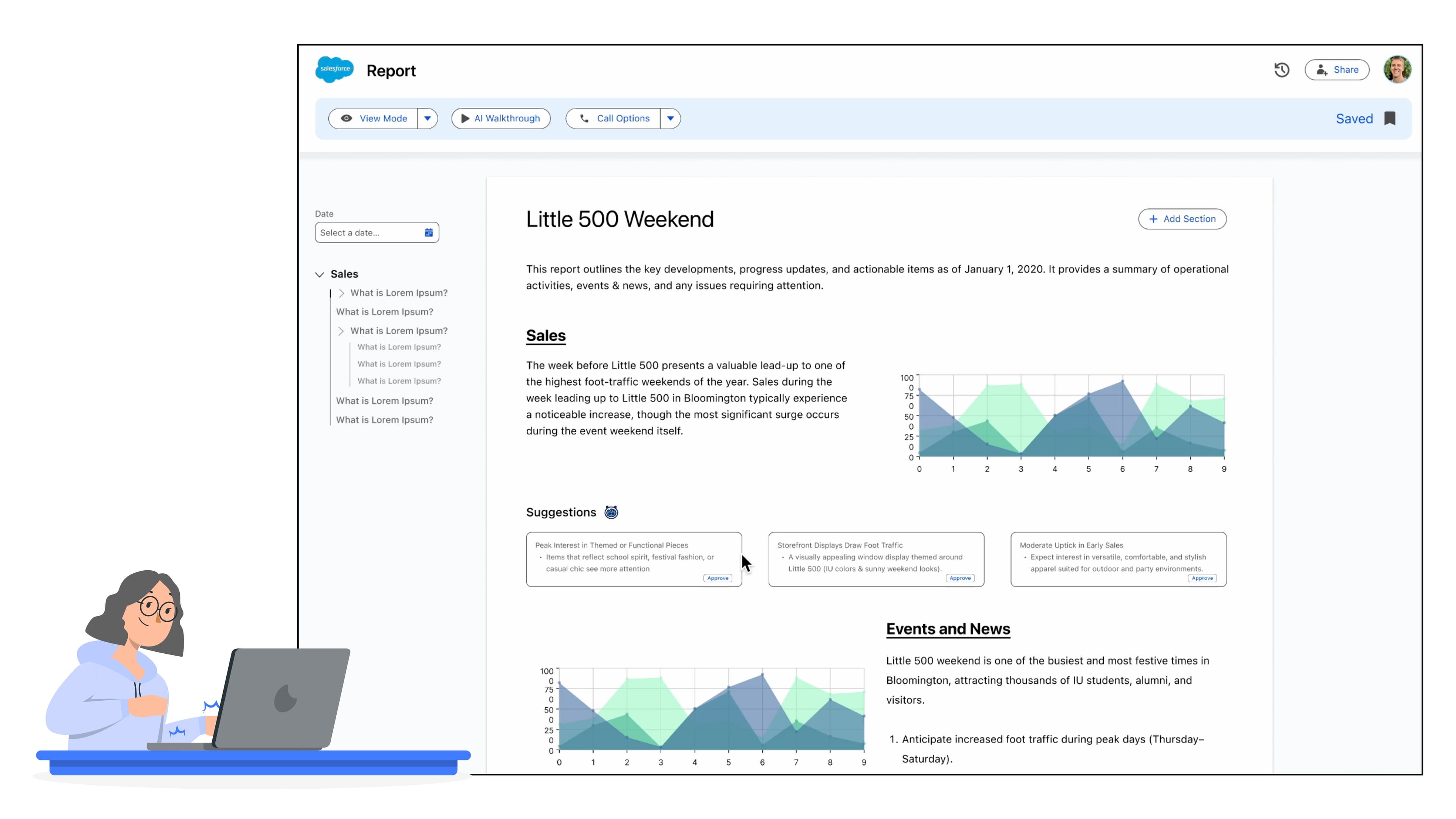
Salesforce Agentforce
UX Design | Agentic AI with Agentforce
TL;DR
I designed a low-friction Agentforce concept that turns messy local demand signals into simple weekly reports small business owners can actually trust and use.
Date
Jan 2025 – May 2025
Role
UX Researcher
UX Writer
UX Designer
Tools
Figma
Salesforce Lightning Design System
Google Docs
Methods
Co-Design
Interview
Introduction
In collaboration with Salesforce, we explored how Agentic AI could help small business owners in Bloomington, Indiana manage unpredictable demand-from seasonal shifts to local events and inventory surprises.
About Bloomington
Bloomington is a college town where many local businesses depend on Indiana University foot traffic. Breaks and campus events create dramatic swings in demand, and most owners don't have tools to adapt quickly.
Problem
Owners already manage daily complexity. When unexpected events hit, many rely on instinct because existing tools feel complex or unfamiliar. We needed a way to deliver timely insights in a format that feels simple and trusted.
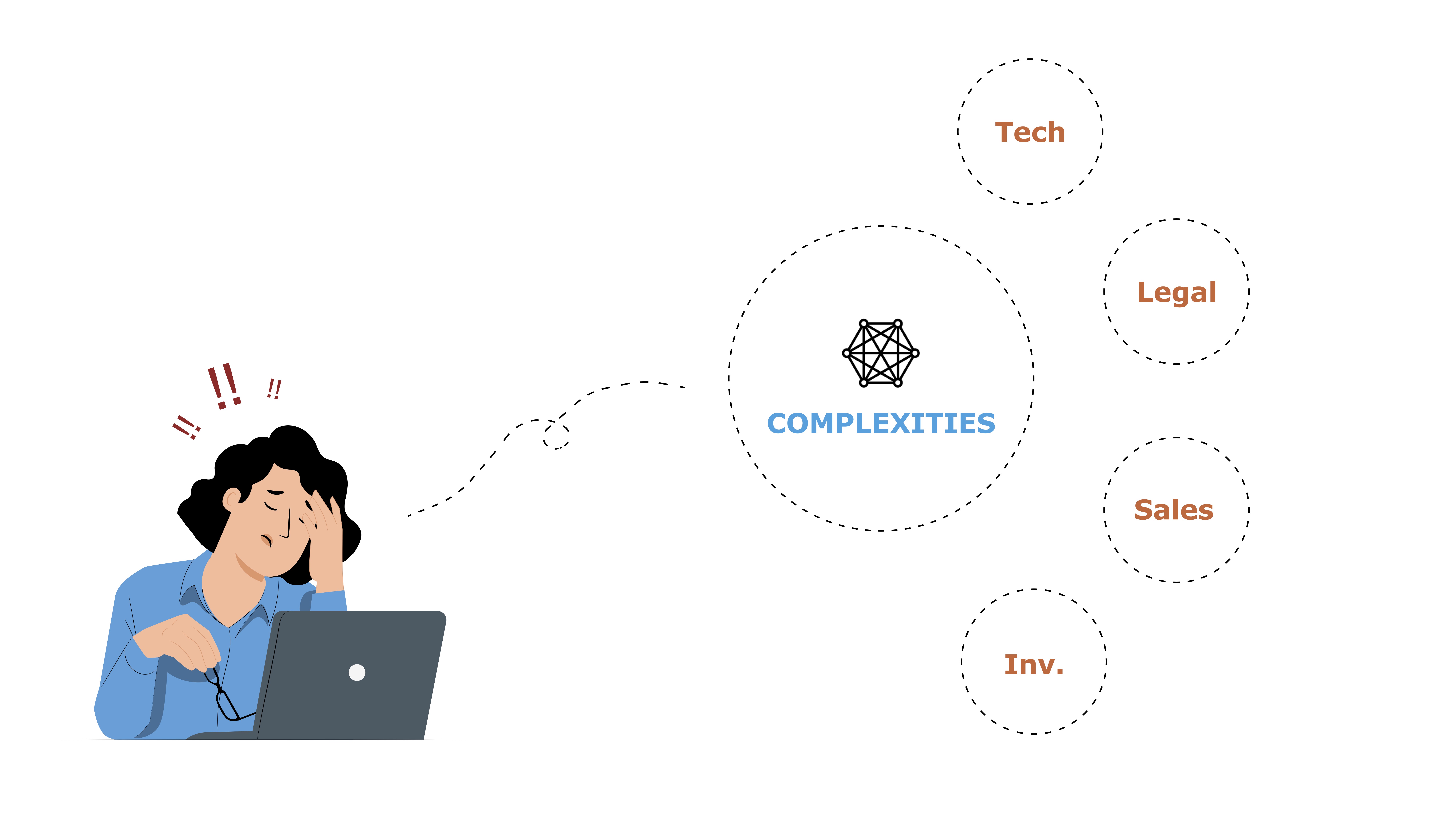
How can we address unpredictability for small business owners, allowing them to focus on what they love while getting intuitive and accessible information and analysis supported by Agentic AI?
Persona
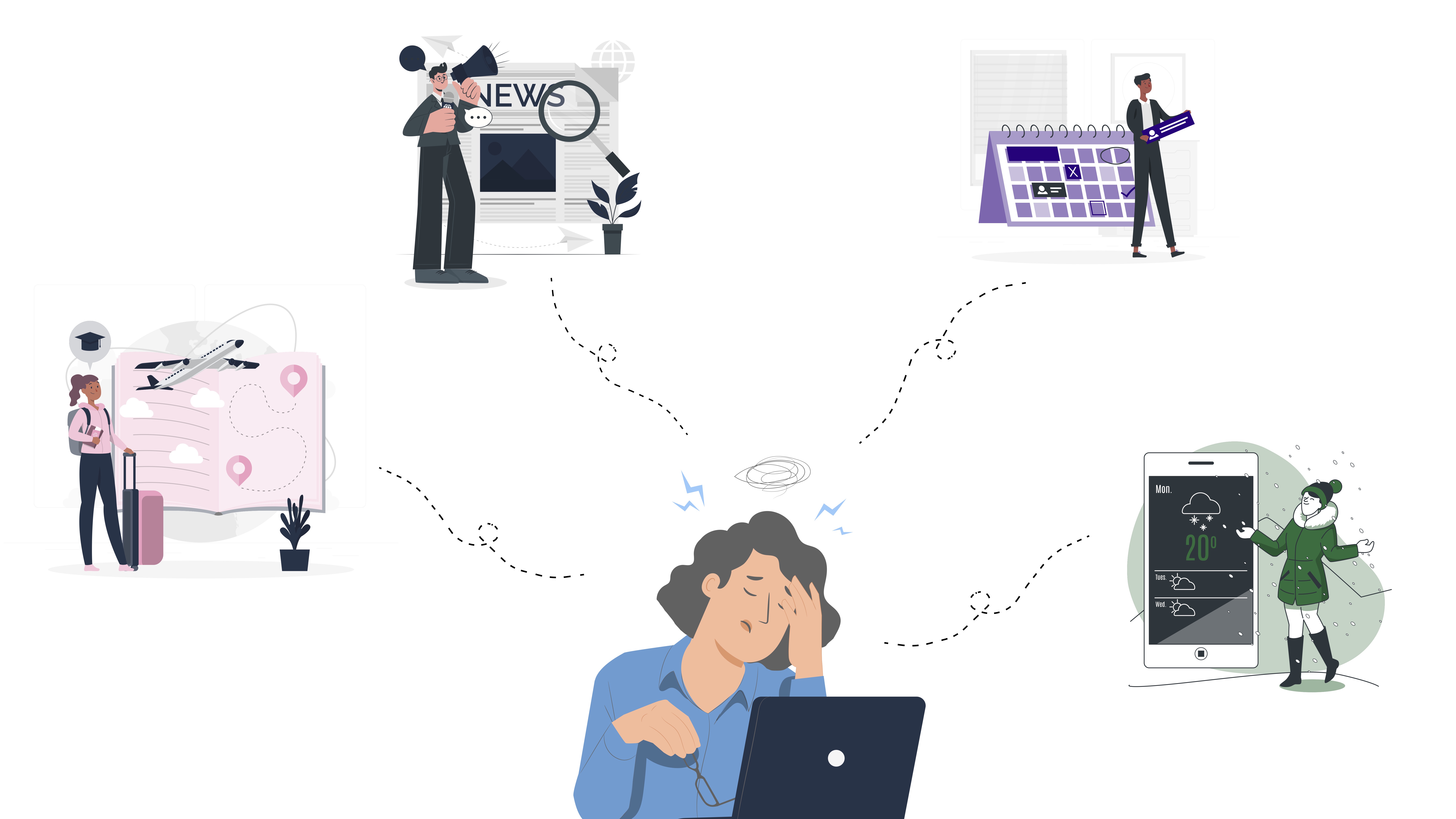
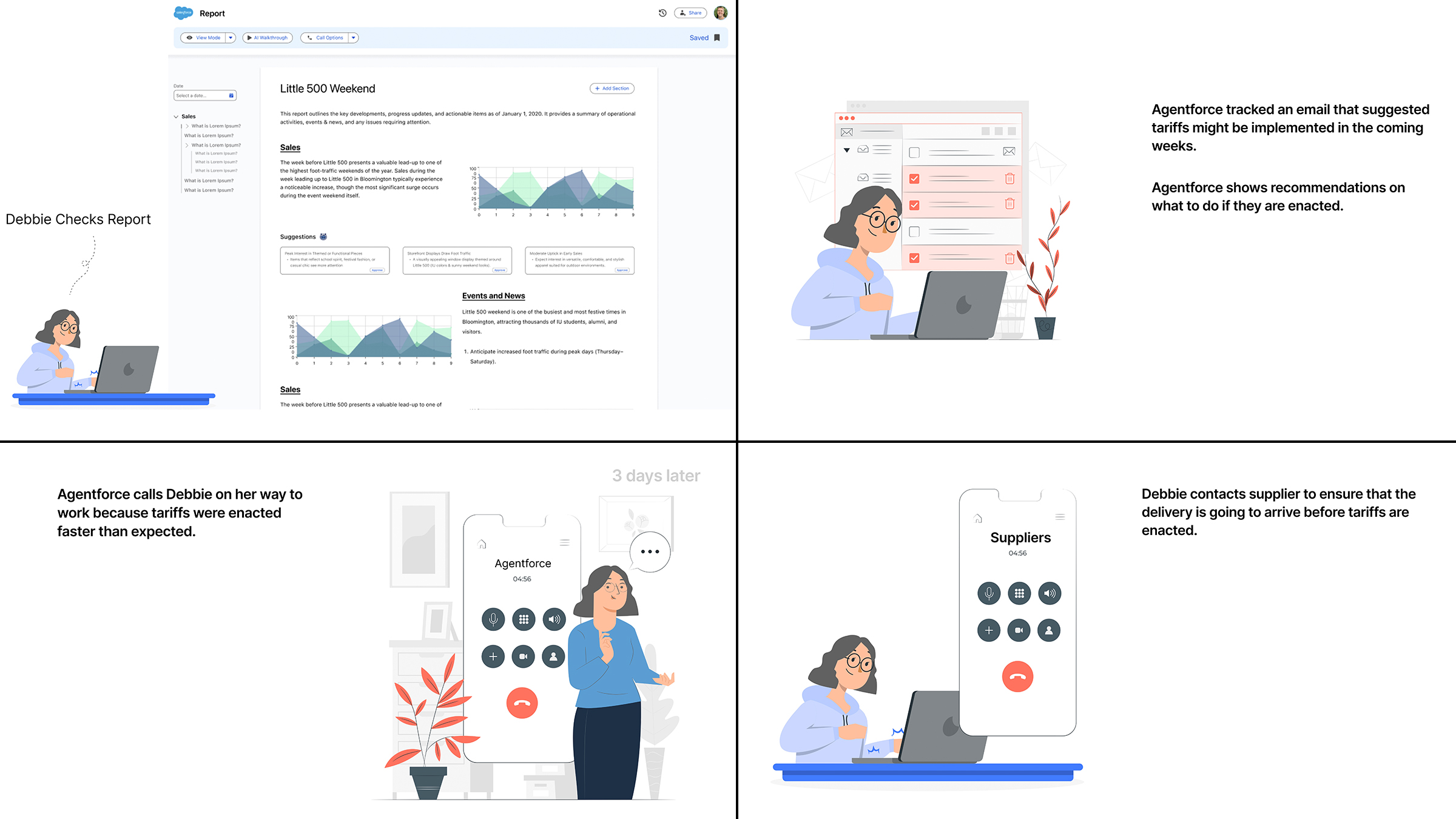
Meet Debbie, a Bloomington small business owner. She juggles inventory, staffing, and marketing while tracking local events and weather that can make or break a week.
Interview & Co-Design
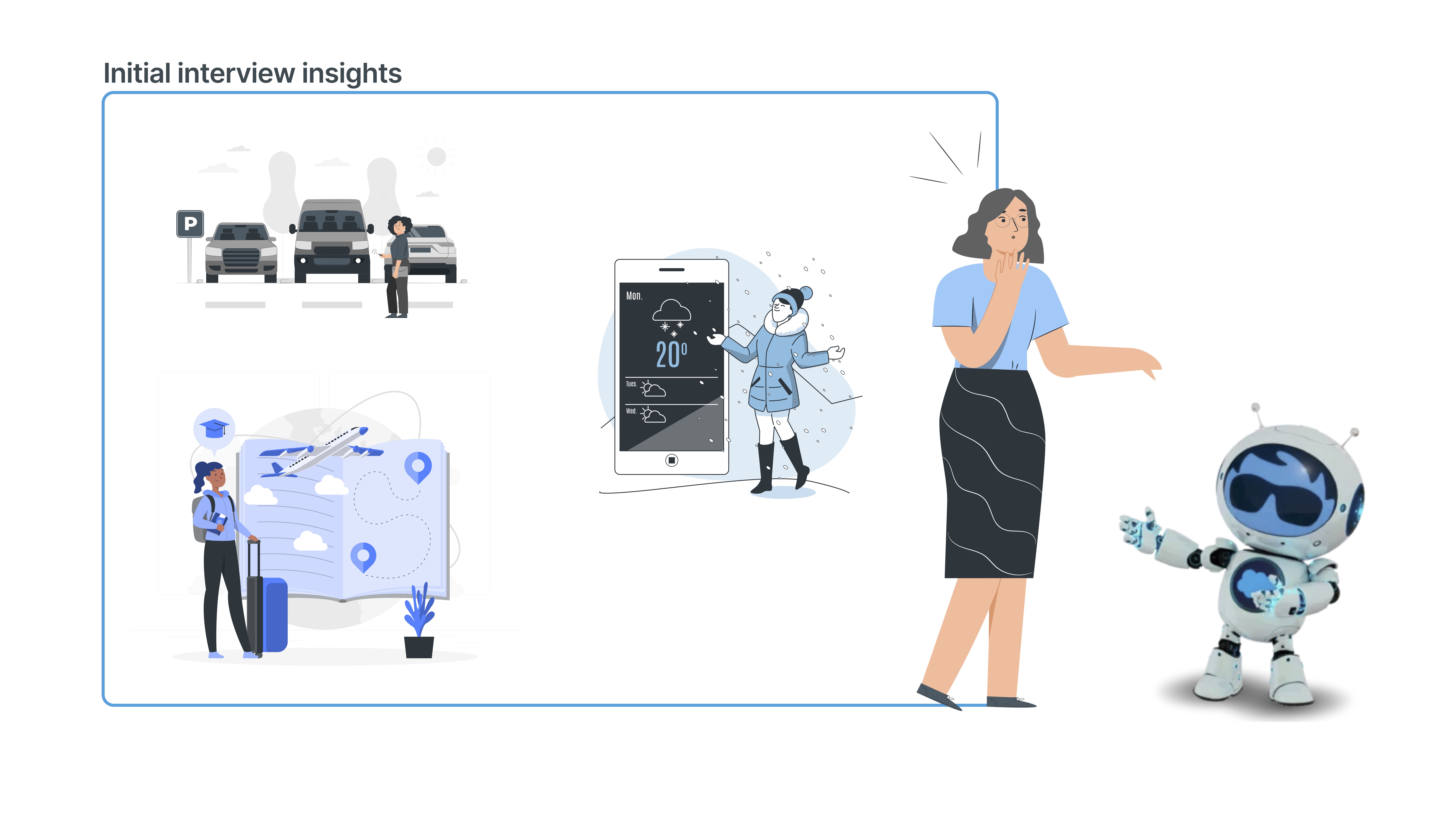
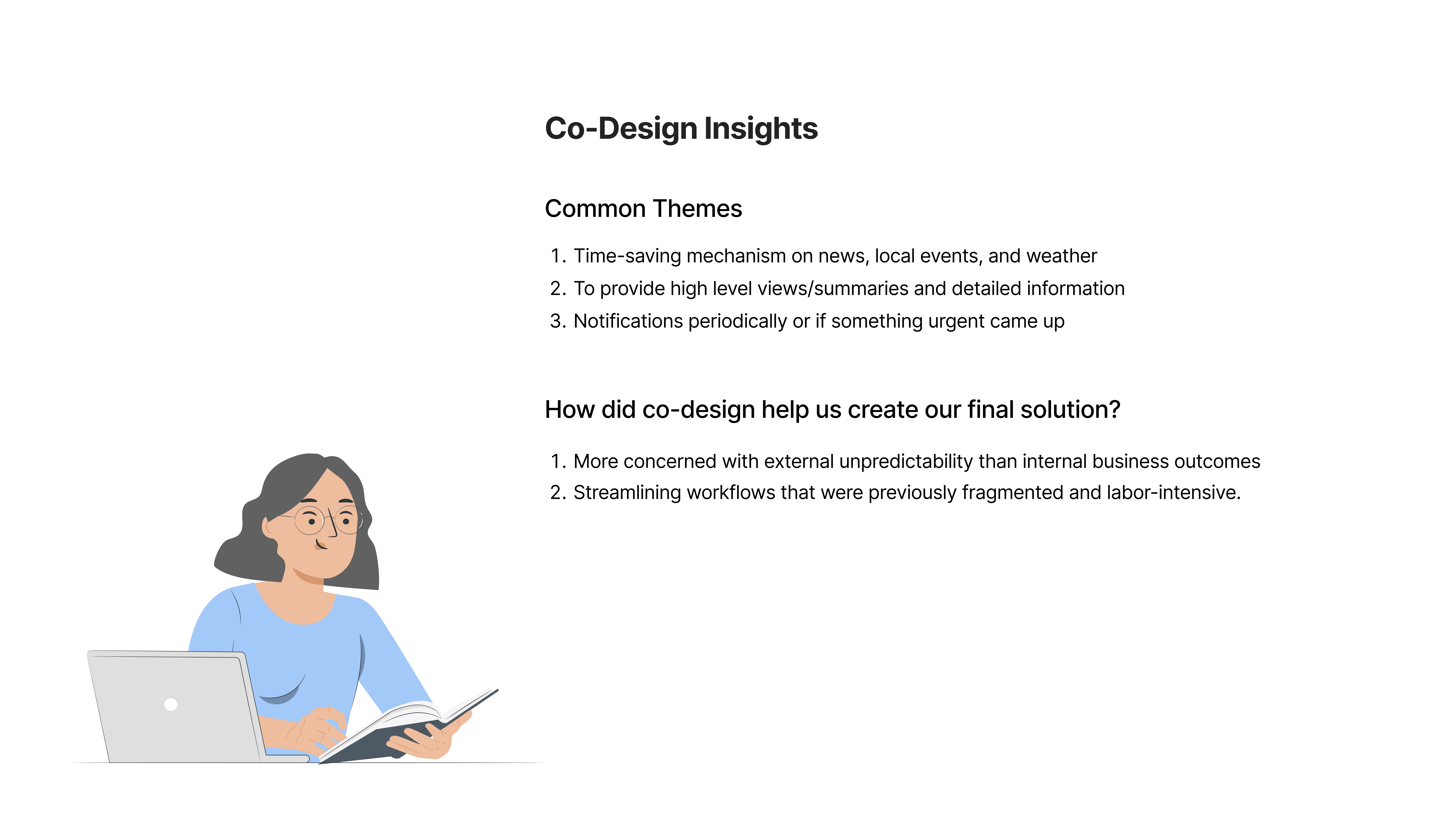
Interviews and co-design showed that owners trust their experience more than dashboards. The real pain is tracking unpredictable local events. They asked for information delivered in a familiar, low-effort format-not another complex tool.
Why Agentforce?
Agentforce quietly handles mundane and repetitive tasks, delivering timely insights so owners can focus on what truly matters-serving their customers and merchandising.
Main Document
Sub Document
Solution: Agentic Report
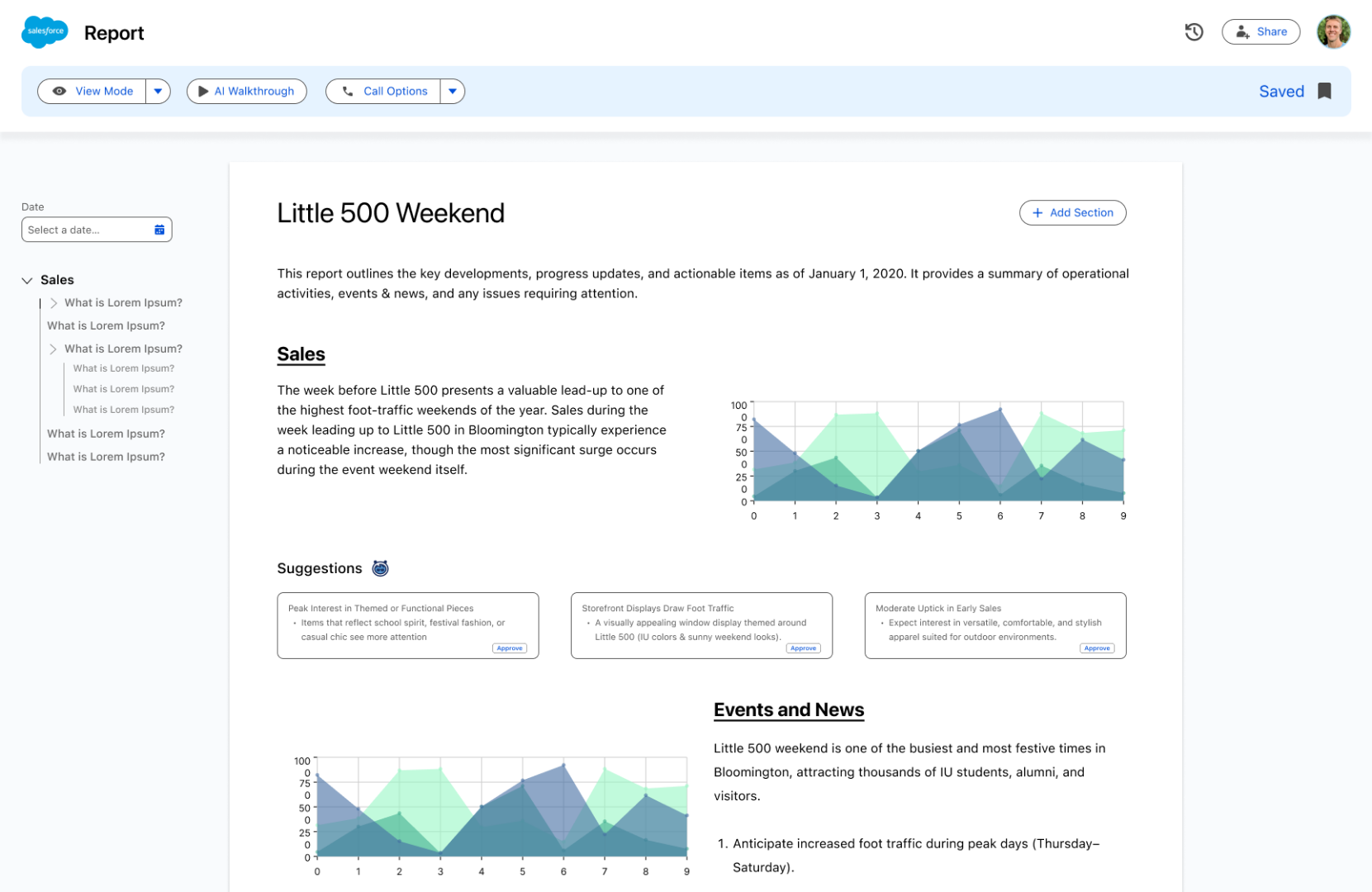
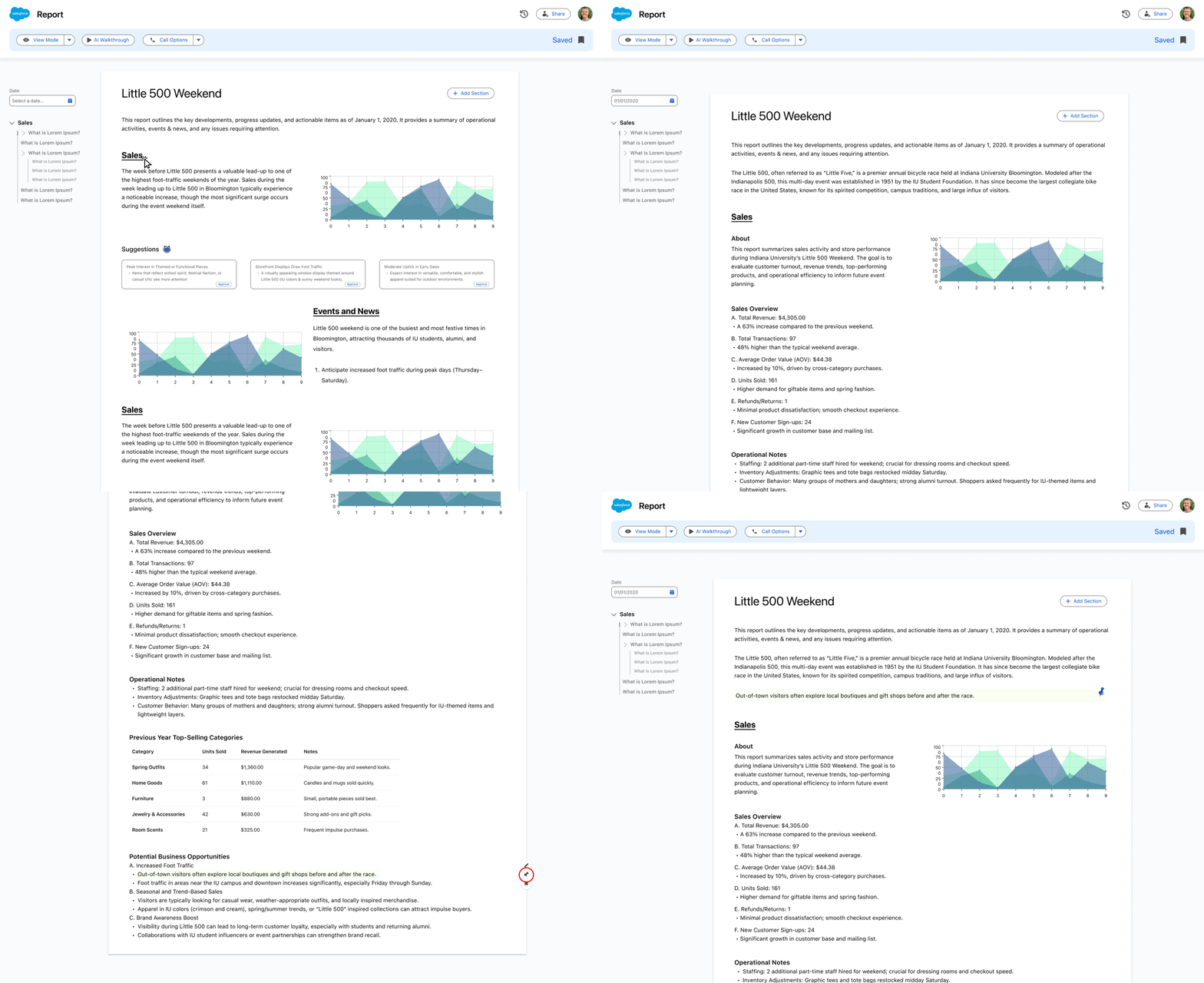
Our solution is a weekly AI-generated report that integrates POS data, event calendars, and local news into a clear, actionable summary. It can be delivered as a visual brief, a voice message, or a phone call-based on the owner's preference.
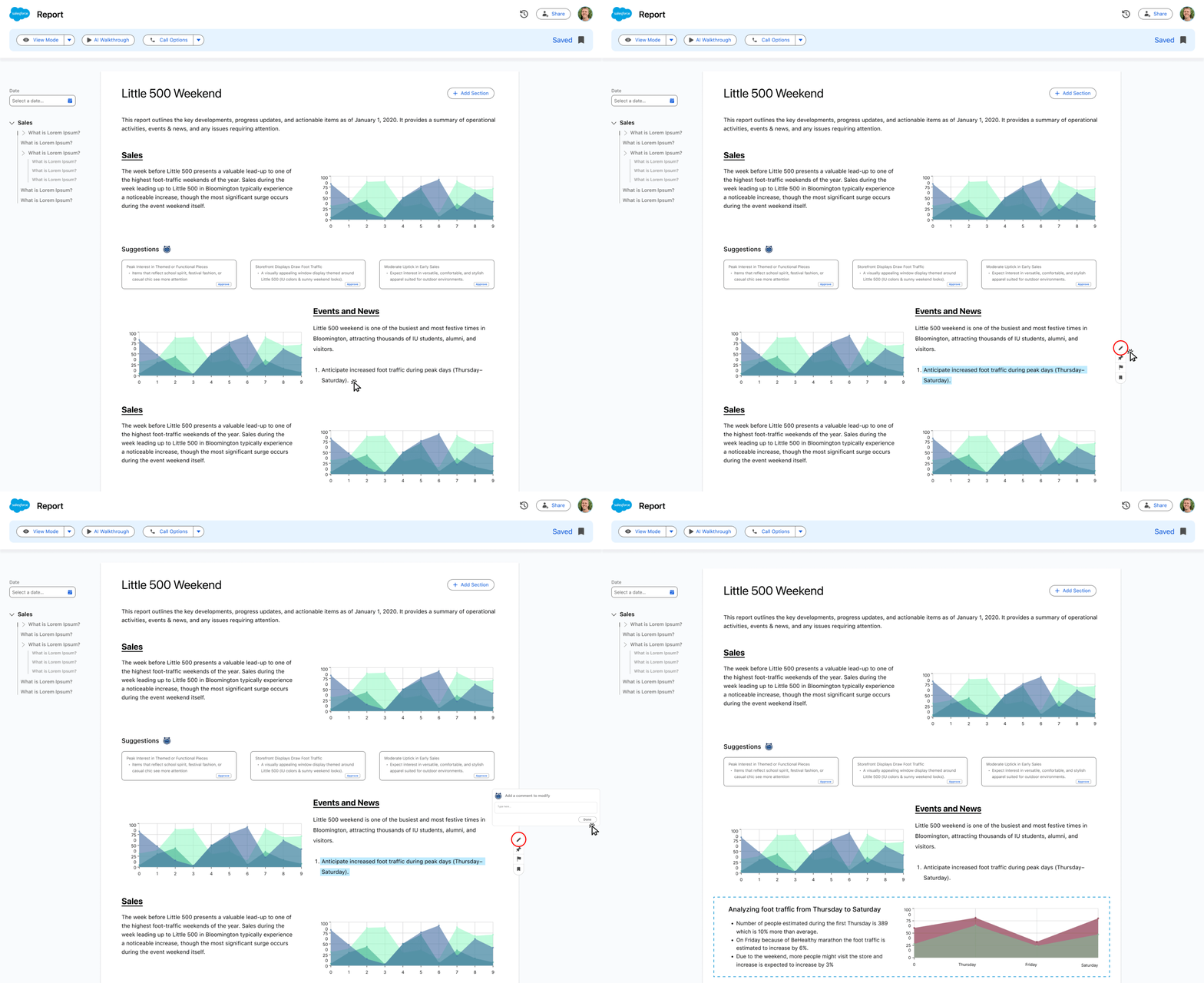
The report generates simple, customizable summaries that feel familiar-like a Google Doc, newspaper, or magazine-rather than software.
Suggestions
Instead of going back to the POS and implement the suggestions, owners can directly implement these by approving it via the report.
Catalog Information
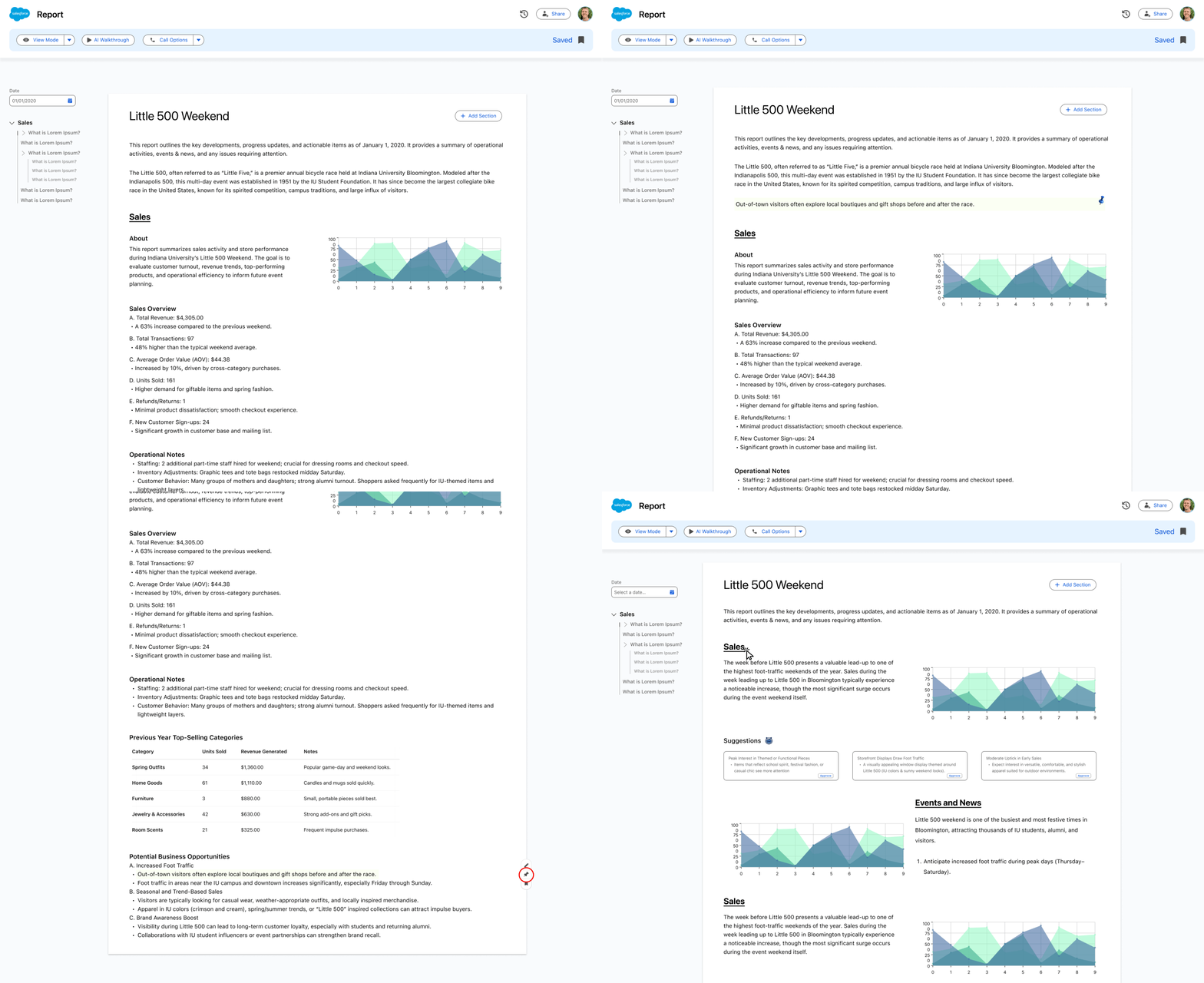
If there is one-off information that might be important to know in the future, we wanted to provide an easy way to save and catalog it.
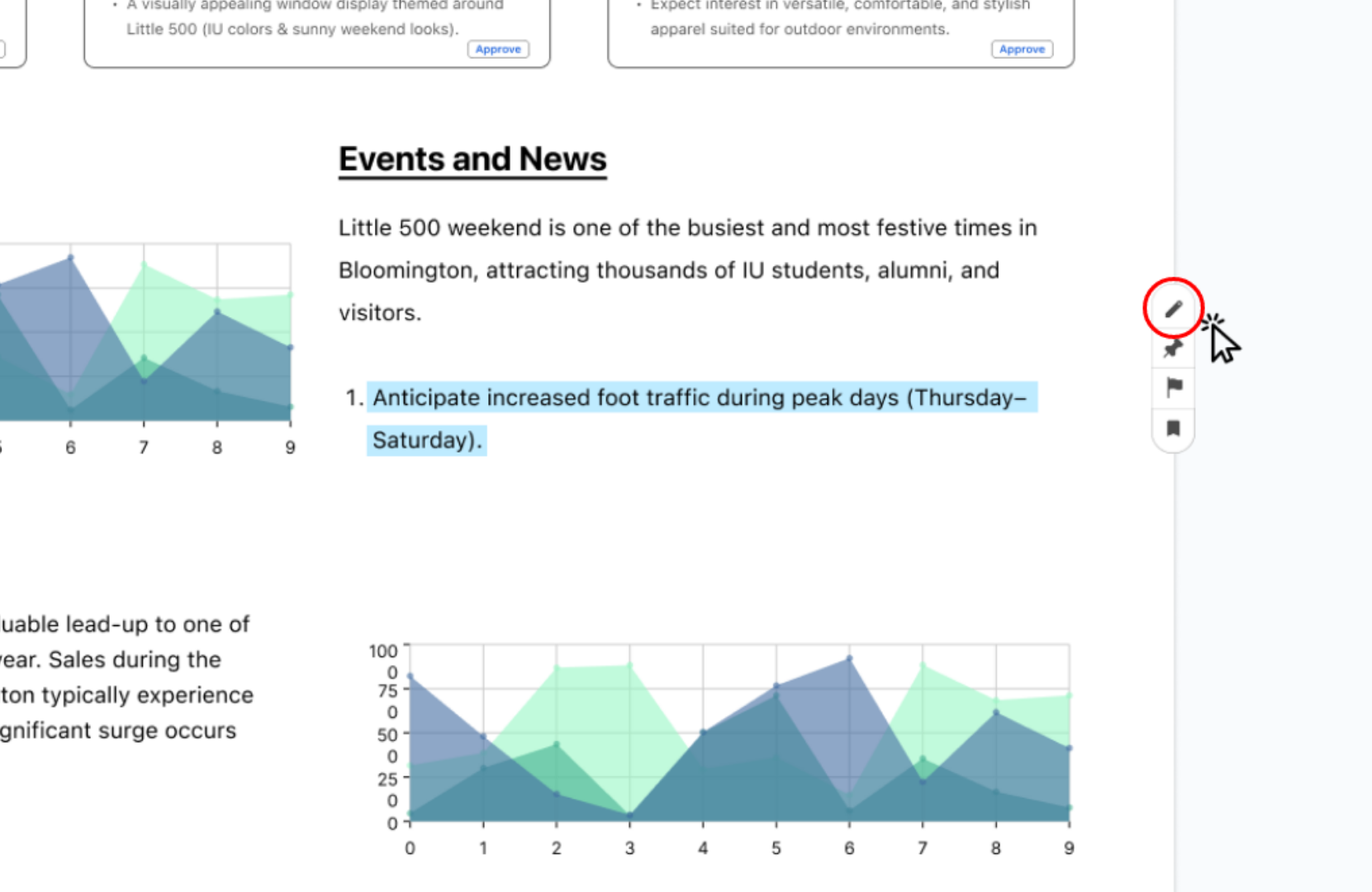
Pinning to save information
Information isn't the only thing someone might want to save for the future. Formatting, style, and language preferences will be maintained in future reports when pinned.
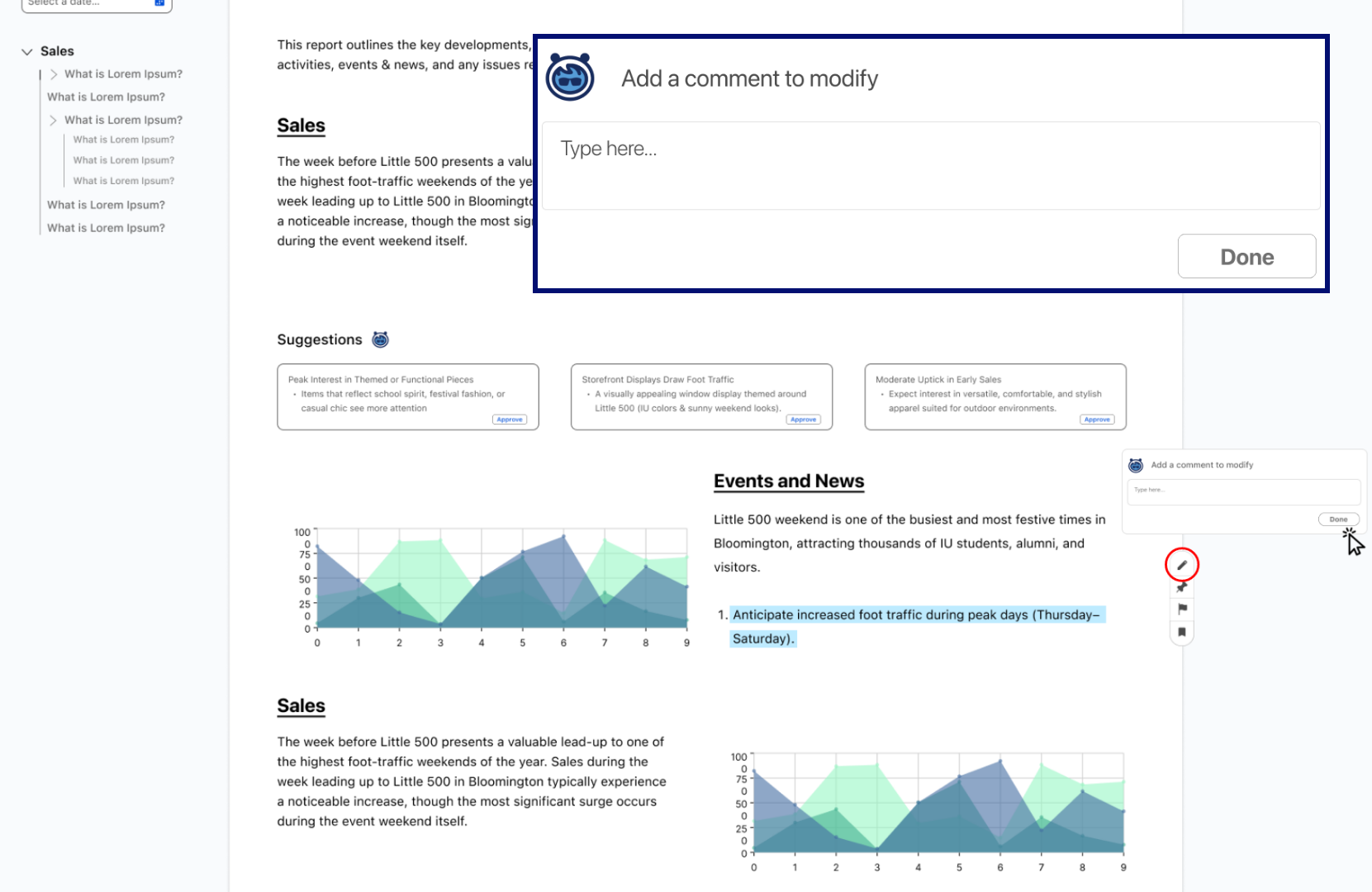
Feedback
SBOs emphasized the need for flexibility—by allowing quick edits, the system learns and adapts, creating a report tailored to their preferences over time.
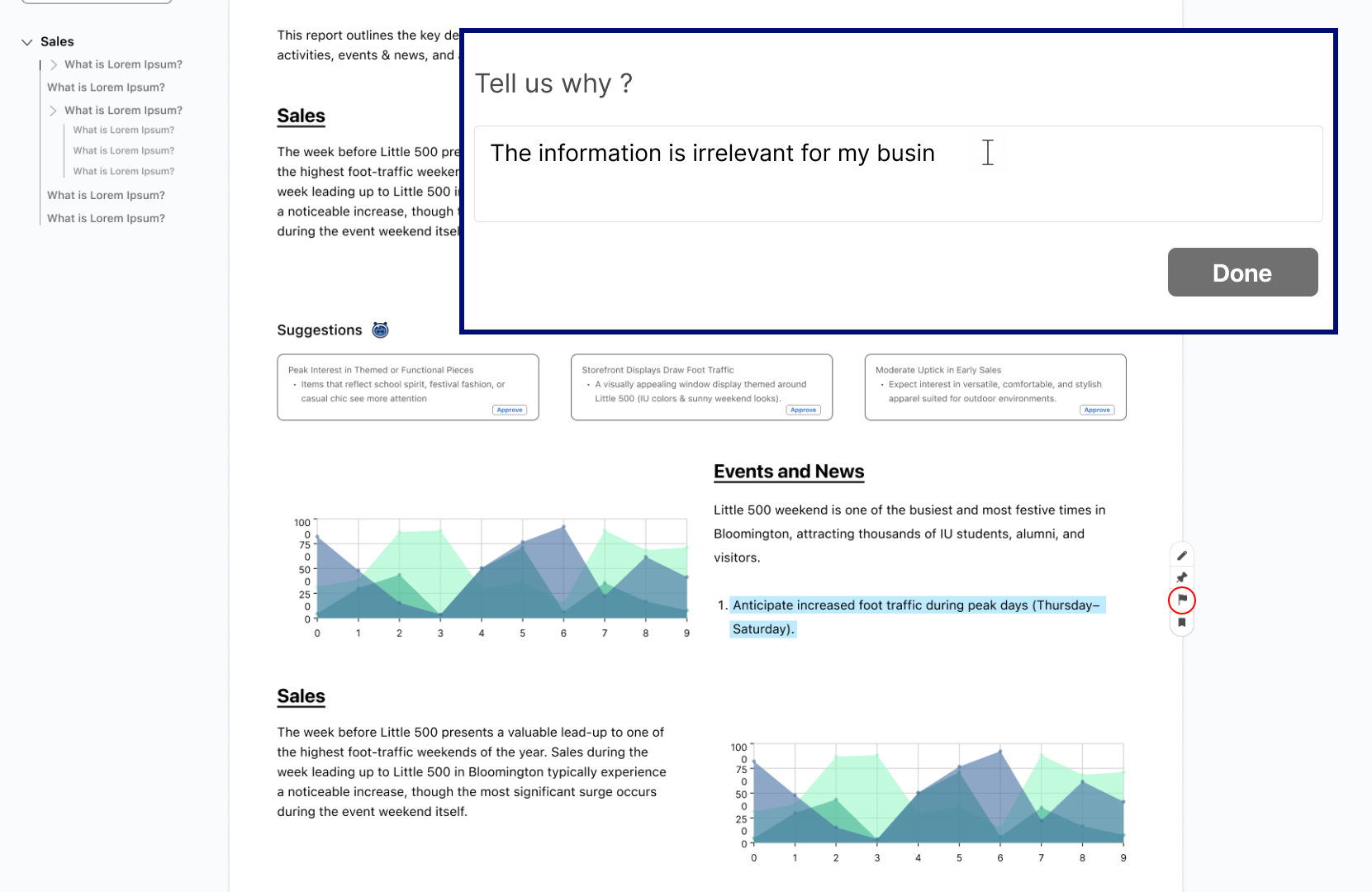
Flagging unwanted/irrelevant information
We wanted owners to have a quick way to report or flag information that they do not wish too see and provide reason (optional) to keep the system informed.
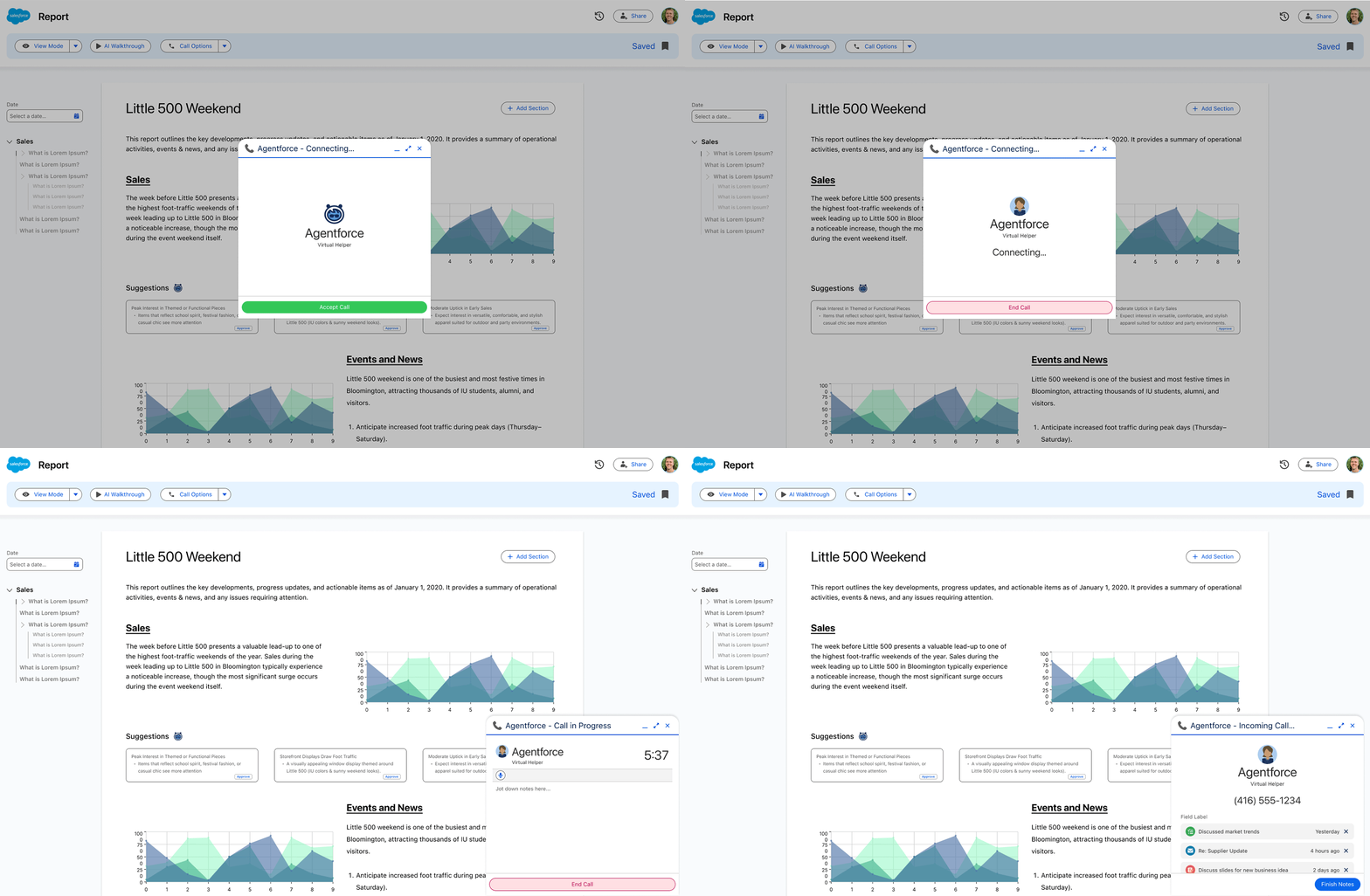
On the go calls
In the event of an urgent message, a business owner needs to know fast, getting a phone call lets them get all the information they need wherever they are.
Impact
The concept gives owners timely, personalized insights without requiring constant monitoring. By translating events, weather, and campus activity into a concise summary, the report helps owners decide faster and stay focused on customers.
Reflection
This project reinforced that effective design isn't about more features-it's about listening. For non-technical users, simplicity, trust, and familiarity often matter more than novelty.
Explored Concepts & Pivot
Throughout the project, we explored several directions before arriving at our final solution:
- Store Heatmaps: Dismissed due to cost, privacy concerns, and limited value for small businesses.
- Inventory Management Dashboard: Redundant for owners already using Square.
- Proactive AI Assistant (Voice/Call): Scaled back after learning owners were cautious about AI and preferred familiar tools.
These explorations clarified what owners actually needed: a simple, proactive summary that saves time and avoids digital complexity.